
The Invisible Wall We Build Around Normal
We all have an internal compass that points toward what feels right, natural, and normal. But here’s the uncomfortable truth: our definition of “normal” is often a reflection of who we already know—and who looks like us, thinks like us, and speaks like us.
Derek Sivers’ TED talk “Weird or just different” captures this beautifully. He reminds us that what appears as difference is often just another perspective on the same human experience. Yet despite this insight, our brains still default to favoring those who mirror our own norms.
This isn’t a flaw—it’s a feature of human psychology. We’re wired for connection, and similarity provides an easy shortcut to trust and belonging. But when we conflate “similar” with “better,” we inadvertently build invisible walls around ourselves.
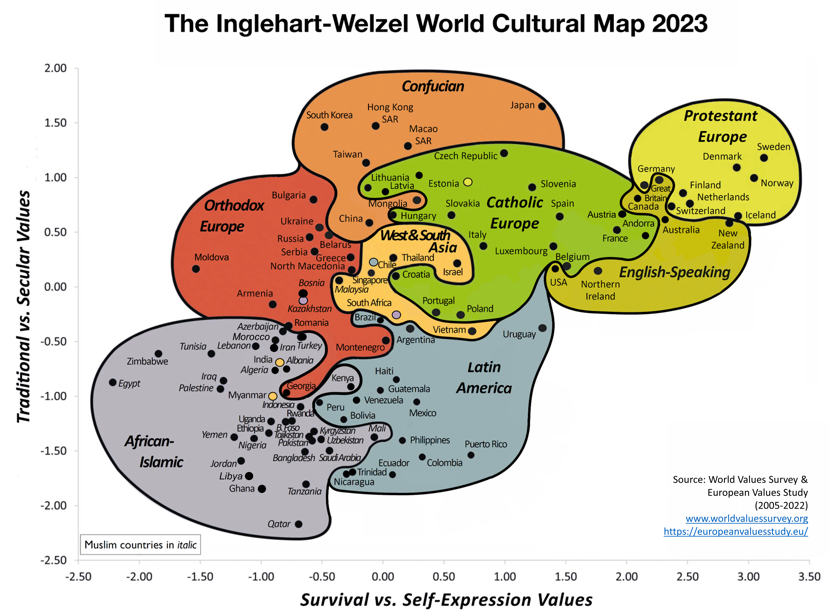
Consider the World Values Survey’s cultural map. Sweden sits in the top-right quadrant—what researchers call the “secular-rational” cluster. This positioning reflects a society that values individual autonomy, gender equality, and secularism. These aren’t universal truths; they’re cultural norms specific to certain regions and histories.
The irony? When we encounter someone from a different background, our first instinct might be to categorize them as “different”—and therefore potentially less relatable or trustworthy. We measure their values against our own Swedish norm without realizing that our norm is just one of many valid ways humans organize themselves.
This is where diversity and inclusion work becomes personal. It’s not about forcing everyone to adopt the same norms—that would be assimilation, not inclusion. True inclusion means creating spaces where multiple “norms” can coexist without anyone feeling like they need to shrink themselves to fit in.
As Maya Angelou once said: “If you are always trying to be normal, you will never be unique.”
This quote resonates deeply with our discussion on norms. When we prioritize fitting into the existing mold, we lose the opportunity to appreciate what makes us—and others—unique. We miss out on the richness that comes from diverse perspectives and experiences.
The next time you notice yourself feeling more comfortable around people who look or think like you, pause and ask: Is this comfort coming from genuine connection, or from the ease of shared norms?
We don’t need to eliminate our natural tendency toward similarity-seeking. But we can choose to expand what “normal” means—to recognize that someone’s different background doesn’t make them less human, just differently wired.
The world isn’t broken because it contains differences. It’s only broken when we pretend those differences shouldn’t exist.